Background
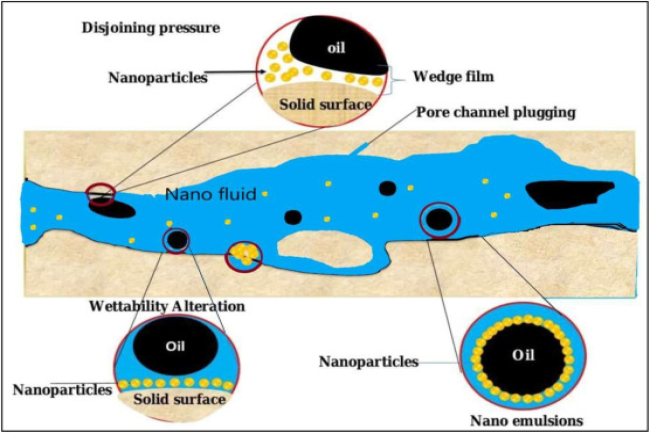
Chemical enhanced oil recovery (cEOR) faces significant challenges. One of the reasons is the availability, or lack of, compatible chemicals in high temperature and high salinity (HTHS) environments. Also, application of traditional cEOR methods is limited by high cost and the fact that these chemicals cause environmental pollution when spilled. In line with Sustainable Development Goals (SDGs) 6, 14 & 15, it is imperative to formulate an environmentally friendly surfactant which is cheap for application in high temperature high salinity reservoirs. Therefore, this project seeks to identify plants with naturally high saponins, extract these saponins and formulate a fluid in synergy with nanoparticles. The prepared biosurfactant based nanofluid will then be characterized and optimized. The optimized biosurfactant based nanofluids will be subjected to high temperature high salinity conditions and the most stable fluid selected for core flooding to determine the ultimate recovery factor. A guiding document will be prepared on the formulated biosurfactant based nanofluid with innovative guidelines to stimulate interest from industry to adopt it. Pilot field tests is proposed for the formulated fluid to be tried in cEOR.
Objectives
- To extract, characterize, optimize natural saponin and formulate a synergistic biosurfactant based nanofluid for EOR
- To examine the incremental oil recovery of the formulated biosurfactant based nanofluid on core plugs under HTHS conditions
- To determine the rate of saponin adsorption on rock surface
Proposed Method
- Saponin Extraction: Standard methods such as maceration and the spray drying method shall be used to extract saponins.
- Saponin Characterization: FTIR, TGA, TLC, UV, HNMR, SEM shall be used to characterize the extracted saponins.
- Fluid Optimization: The CMC of the saponin fluid shall be determined under HTHS conditions. Then various nanoparticles will be screened under HTHS conditions. The biosurfactant based nanofluid will then be formulated based on a pass criteria depends on several parameters. IFT, wettability and other oil recovery mechanisms of the optimized fluid shall be studied.
- Incremental oil recovery: laboratory core flooding experiments shall be conducted to assess the incremental oil recovery under HTHS conditions. A Machine Learning approach shall be used to predict incremental predict incremental oil recovery based on rock and fluid properties.
- Adsorption studies: Physisorption and chemisorption techniques shall be used to study saponin adsorption on rocks.